Sleep After 60: What's Normal, What's Not and How to Sleep Better
By Satyavadan Prakhya · November 3, 2026 · 7 min read
A common myth says older people need less sleep. In fact, adults over 65 still need about 7–8 hours. What changes is how sleep feels: lighter, with more waking, and earlier at both ends. Some changes are a normal part of ageing; others are signs of treatable problems. Here's how to tell them apart.
What's normal after 60
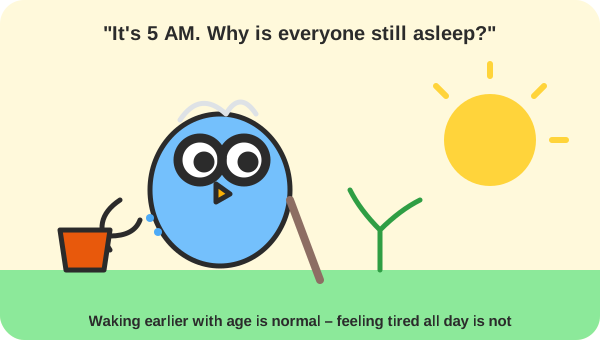
- Feeling sleepy earlier in the evening and waking earlier in the morning.
- Lighter sleep with less deep sleep, and waking briefly a few times a night.
- One short afternoon nap.
What's not normal
- Feeling tired or sleepy most of the day despite enough time in bed.
- Loud snoring with pauses or gasping (sleep apnea becomes more common with age, in both men and women).
- Getting up 3 or more times to pass urine every night.
- Acting out dreams – shouting, punching or falling out of bed.
- Strong urges to move the legs in the evening (restless legs).
- New confusion, memory problems or night-time wandering.
All of these deserve a visit to the doctor.
Benchmarks for seniors
| Measure | Healthy target |
|---|---|
| Total sleep | 7–8 hours in 24 hours (night sleep plus a short nap) |
| Daytime nap | 20–30 minutes, before about 3 PM |
| Time to fall asleep | Within about 30 minutes |
| Night waking | Brief wakings are normal; back to sleep within about 20 minutes |
| Daytime | Alert enough to enjoy the day, read, and drive safely |
Practical steps for better sleep after 60
- Morning light and movement: a walk, yoga or gardening in daylight.
- Steady times: the same wake-up time daily; go to bed only when sleepy.
- Fluids earlier: drink well during the day but cut down 2 hours before bed.
- Watch tea and coffee after lunch – sensitivity to caffeine often rises with age.
- Stay connected: calls with family, temple or community visits, a hobby group. Loneliness hurts sleep.
- Safe bedroom: a night light on the way to the bathroom, no clutter on the floor.
- Review medicines with your doctor: some blood pressure tablets, water pills, steroids and others can disturb sleep.
💊 Be careful with sleeping pills. In older adults, many sleeping tablets and “night-time” cold or allergy medicines can cause next-day drowsiness, confusion and falls. Never start, stop or share them without your doctor's advice.
For families
If your parents live with you or far away in India, ask them about sleep during your calls – many won't mention it themselves. Help them book a check-up for snoring, night-time confusion or constant tiredness, and encourage daytime activity and company.
This article is general health education, not medical advice. Sleep problems can have many causes. If you're worried about your sleep or anyone in your family, please speak to a qualified doctor.
Helpful tools
- Motion-sensor night lights – a safer path to the bathroom at night.
- A large-display clock – easy to read without glasses.
- A supportive pillow – for neck and shoulder comfort.
As an Amazon Associate, Study Timer earns from qualifying purchases. This doesn't change the price you pay.
Keep your mind sharp – read or learn in calm 25-minute sessions.
Open the free Study Timer →