Blog › Sleep › Children and teens
Sleep for Children and Teenagers: How Much They Need and How to Help
By Satyavadan Prakhya · November 3, 2026 · 7 min read
Children's sleep needs change fast – a newborn sleeps most of the day, while a teenager can sleep until noon if you let them. Here's what's normal at each age, the common problems, and when to talk to your paediatrician.
Sleep benchmarks for children
| Age | Total sleep (24 h) | Typical pattern |
|---|---|---|
| 0–3 months | 14–17 h | Sleeps in 2–4 hour stretches around the clock |
| 4–11 months | 12–15 h | Longer night sleep, 2–3 naps |
| 1–2 years | 11–14 h | 1–2 naps |
| 3–5 years | 10–13 h | One nap, often dropped by 5 |
| 6–13 years | 9–11 h | No naps; bedtime around 8–9:30 PM for school days |
| 14–17 years | 8–10 h | Body clock shifts later – sleepy later, hard to wake |
Source: National Sleep Foundation and American Academy of Sleep Medicine recommendations.
Babies and toddlers
- Safe sleep: babies should sleep on their back, on a firm flat surface, without pillows, soft toys or loose blankets.
- Night waking is normal in the first year. A calm, repeated bedtime routine (bath, feed, song, lights out) helps them learn.
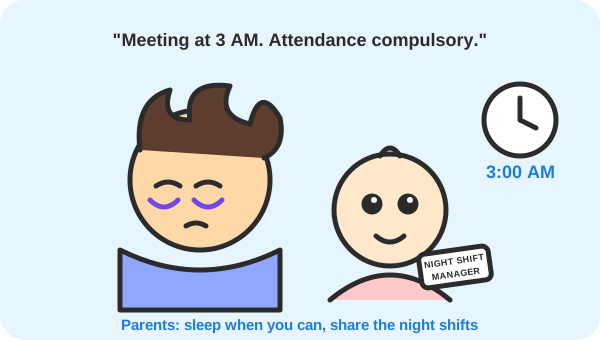
- Parents: sleep when the baby sleeps when you can, and take turns with night duty.
School-age children (6–13)
- Fixed bedtime and wake time, even at weekends (within about an hour).
- No screens in the bedroom and screens off at least an hour before bed.
- No caffeine – watch out for cola, iced tea, energy drinks and chocolate in the evening.
- Plenty of outdoor play and daylight; it improves night sleep.
- Signs of too little sleep: crankiness, hyperactivity, poor concentration – sometimes mistaken for ADHD.
Teenagers (14–17)
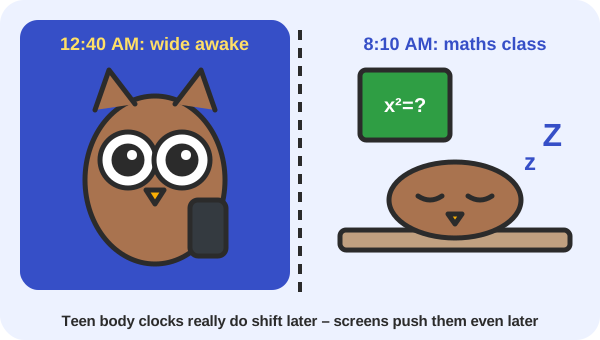
During puberty the body clock really does shift later, so teens naturally feel sleepy later at night. Add early school, coaching classes, homework and phones, and many teens sleep only 6–7 hours.
- Phones charge outside the bedroom at night – the single most effective rule.
- Morning sunlight and breakfast help reset the clock earlier.
- Limit weekend lie-ins to about 1–2 hours, or Monday becomes jet lag.
- No all-nighters before exams – sleep is when memory is stored. See Sleep and Studying.
- Short naps (20–30 minutes) after school are fine; long late naps are not.
Common problems in children
- Snoring most nights, mouth breathing or pauses in breathing – often due to large tonsils or adenoids. See your paediatrician; an ENT may be needed.
- Night terrors and sleepwalking – the child seems awake but isn't. Keep them safe, don't wake them forcefully; most children grow out of it.
- Bedtime fears and nightmares – reassurance, a night light and calm routines help.
- Bedwetting after age 5–7 – common and usually outgrown, but worth discussing with the doctor.
When to see the paediatrician
Loud snoring with pauses, very hard waking for school, falling asleep in class, a big change in sleep or mood, or any sleep problem worrying you. Trust your instinct – you know your child best.
This article is general health education, not medical advice. Sleep problems can have many causes. If you're worried about your sleep or anyone in your family, please speak to a qualified doctor.
Helpful tools
- A children's sleep-training clock – shows when it's OK to get up.
- Blackout curtains – for early bedtimes in bright summer evenings.
- A family charging station – so phones sleep outside the bedrooms.
As an Amazon Associate, Study Timer earns from qualifying purchases. This doesn't change the price you pay.
Homework time? Use 25-minute focus sessions and finish earlier.
Open the free Study Timer →